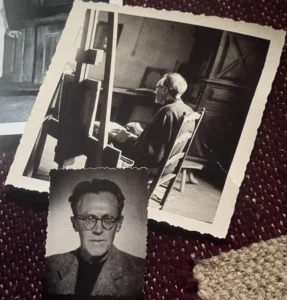
L’exposition « Nicolas Wacker (1897-1987) met en lumière le contexte particulièrement créatif dans lequel il a vécu et travaillé. Depuis Kiev où il est né, son parcours débute à Berlin, en 1922, où il se forme aux avant-gardes les plus radicales. Lorsqu’il s’installe à Paris en 1926, l’Académie Ranson devient en 1928, son véritable foyer artistique. Assistant de Roger Bissière, Wacker s’y lie à Viera da Silva, Bertholle, Manessier, Le Moal, Véra Pagava et Étienne-Martin, un cercle d’affinités intellectuelles et humaines qualifié par Jacques Lassaigne de « compagnonnage artistique » où se révélèrent l’importance des pratiques d’atelier, coopératives et expérimentales.
.
Enseignant à l’École des Beaux-Arts de 1969 à 1984, son atelier devient un lieu de circulation d’idées, où l’expérimentation est fondée sur la matérialité.
.
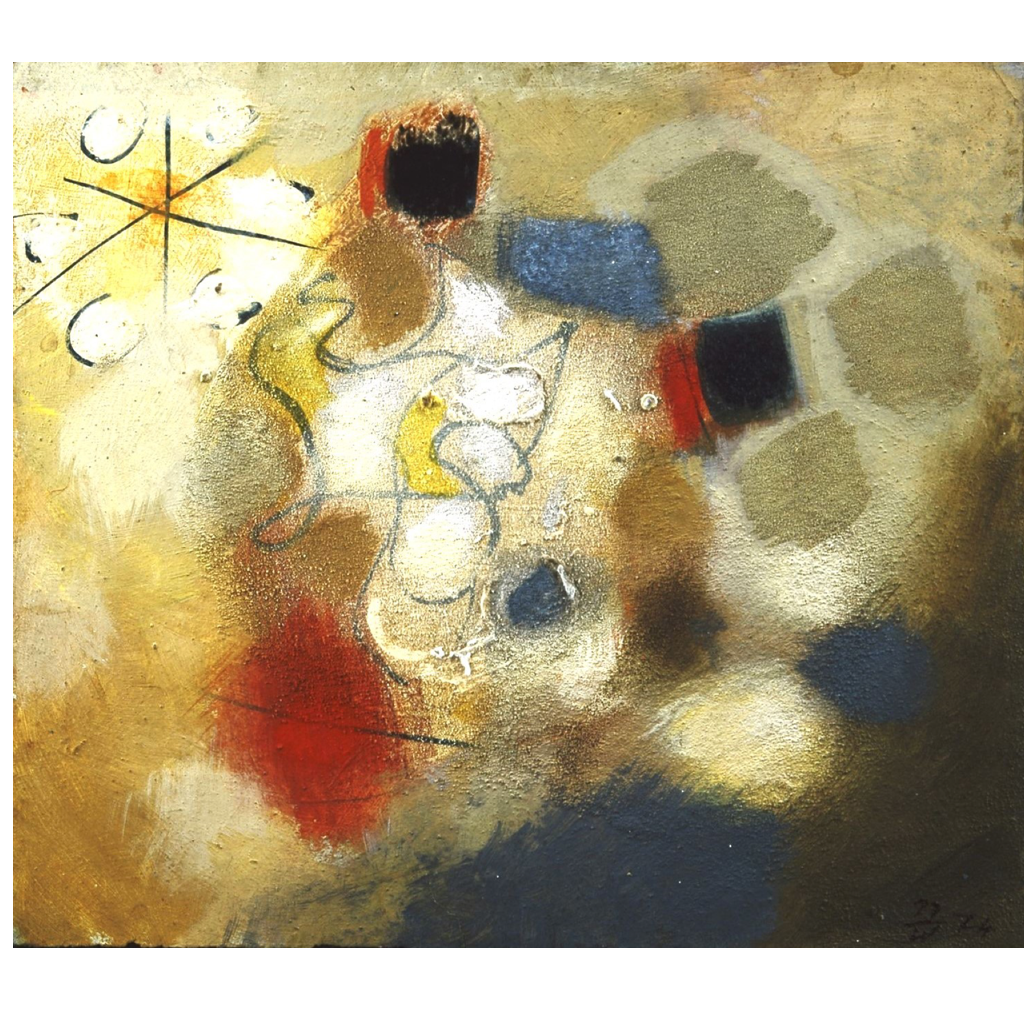
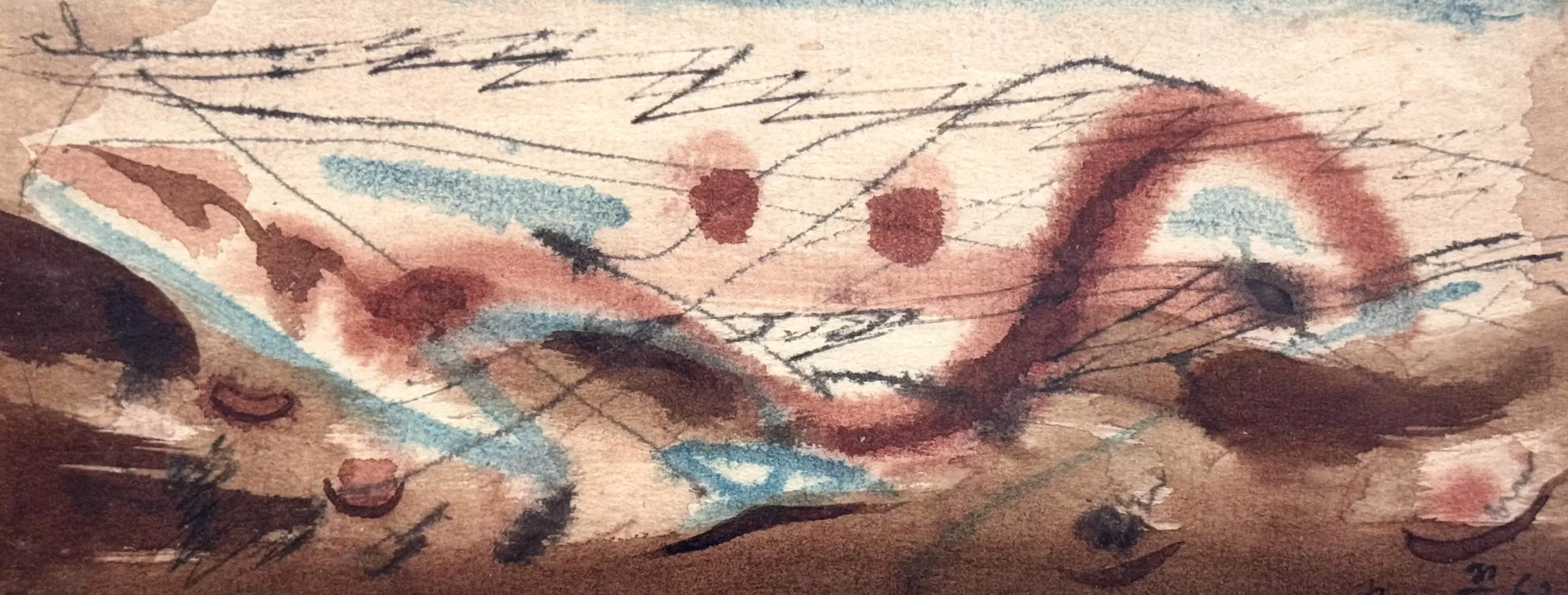
L’apport théorique de Wacker est déterminant avec sa publication : La peinture à partir du matériau brut, (Éditions Allia, 1993 aux nombreuses rééditions), il développe une réflexion sur le registre des couleurs, les liants et les glacis, notions apprises lors de ses années berlinoises lorsqu’il découvrit les écrits du théoricien allemand Max Doermer (1870-1939), « Materials of the artist and their use in paintings ». (1911). Les recettes de couleur des années berlinoises sont la base d’une technique qu’il utilisera toute sa vie. Les matériaux qu’il expérimente font de lui une sorte d’alchimiste de la Renaissance.
.
Son héritage pédagogique éclaire son propre parcours : la conviction que la création ne prend sens que dans une dynamique de partage et de mise en commun. L’œuvre de Wacker se prolonge à la fois dans les toiles qu’il nous a laissé et dans les pratiques des générations qu’il a accompagnées
.
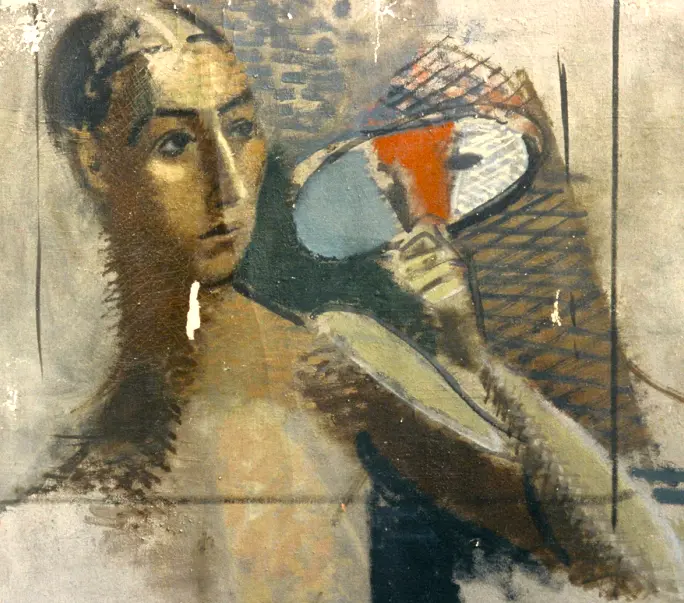
Un ensemble d’oeuvres de jeunesse peu connues, ainsi que, d’autres de la maturité de l’artiste éclaire sa démarche, puis son évolution de part et d’autre de la coupure de la guerre.
.
The exhibition “Nicolas Wacker (1897-1987)” highlights the particularly creative context in which he lived and worked. Born in Kiev, his career began in Berlin in 1922, where he trained in the most radical avant-garde movements. When he moved to Paris in 1926, the Académie Ranson became his true artistic home in 1928. As Roger Bissière’s assistant, Wacker became friends with Viera da Silva, Bertholle, Manessier, Le Moal, Véra Pagava, and Étienne-Martin, a circle of intellectual and human affinities described by Jacques Lassaigne as an “artistic companionship.”.
A teacher at the École des Beaux-Arts from 1969 to 1984, his studio became a place where ideas circulated and experimentation was based on materiality.
Wacker’s theoretical contribution is decisive with his publication: La peinture à partir du matériau brut (Painting from Raw Materials, Allia Editions, 1993, numerous reprints), he develops a reflection on the register of colors, binders, and glazes, concepts he learned during his years in Berlin when he discovered the writings of German theorist Max Doermer (1870-1939), “Materials of the Artist and Their Use in Paintings” (1911). The color recipes from his years in Berlin formed the basis of a technique he would use throughout his life. The materials he experimented with made him something of a Renaissance alchemist.
His pedagogical legacy sheds light on his own journey: the conviction that creation only makes sense within a dynamic of sharing and pooling. Wacker’s work lives on both in the paintings he left us and in the practices of the generations he mentored.
A collection of little-known early works, along with others from the artist’s mature period, shed light on his approach and his evolution on both sides of the war.
.
.